
Russia continues to violate anti-doping rules despite its suspension from international track and field and orders from world athletics' governing body, the IAAF, to eradicate cheating, Germany's ARD broadcaster said on Sunday.
Russia's anti-doping agency (RUSADA) still has significant work to do to get its suspension lifted, the World Anti-Doping Agency said on Monday.

"The IAAF's delaying publication for so long without good reason is a serious encroachment on the freedom of publication," the researchers said in a statement.

Athletics' governing body came under renewed fire on Tuesday following disclosures that top officials were aware of a potentially serious doping problem among Russian athletes as far back as 2009.

Athletics is set to reintroduce four-year doping bans even though the move risks alienating the sport from the world anti-doping authority (WADA), officials said on Wednesday on the eve of the world championships.

World athletics' governing body has suppressed a 2011 survey that reveals that up to a third of the world's top competitors admitted using banned performance-enhancing techniques, Britain's Sunday Times and German broadcaster ARD/WDR reported.
The World Anti-Doping Agency (WADA) said on Friday its Independent Commission will urgently launch an investigation into widespread doping allegations against international athletics.

While handing down a four-year ban on Narsingh Yadav, the Court of Arbitration for Sports has ruled that the wrestler failed to produce any 'real evidence' regarding the sabotage theory he had advanced and the balance of probabilities was that he orally took the banned substance intentionally in tablet form on more than one occasion.

The Russian athletics federation has accepted its ban from the sport in the wake of widespread doping revelations, the International Association of Athletics Federations (IAAF) said on Thursday.

Lamine Diack, the former president of the International Association of Athletics Federations (IAAF), was responsible for organizing and enabling the conspiracy and corruption that took place in athletics' governing body, an independent commission of the World Anti-Doping Agency (WADA) said on Thursday.

Russia will miss the World Athletics Championships for the second time in a row after the sport's governing body the IAAF extended the ban against country's federation.

The Kremlin on Tuesday dismissed allegations from the World Anti-Doping Agency that Russian athletes were guilty of using banned performance-enhancing substances on a large-scale, saying the assertions were groundless.

The scandal revolves around accusations that money was demanded from top athletes to 'bury' medical tests showing drug use
Russia could be banned from international athletics, including the 2016 Olympic Games, after an anti-doping commission report on Monday alleged widespread corruption and collusion that added up to a state-sponsored drugs culture in a sporting superpower.

Summary of sports events and persons who made news on Sunday

Olympic sprint champion Usain Bolt said on Saturday that controversy over Jamaica's anti-doping programme is scaring off potential sponsors and costing him money.

Athletics' governing body the IAAF has rejected claims by the BBC that its president Sebastian Coe misled a British government probe into doping and that he was helped in his presidential campaign by the son of his predecessor in the position.

TUEs are issued by sports federations and national anti-doping organizations to allow athletes to take certain banned substances for verified medical needs.

Key points from the independent commission of the World Anti-Doping Agency (WADA) report, released on Wednesday, and from comments made by co-author of the report, Dick Pound at a news conference.

IAAF president Sebastian Coe says there has been no cover up of Russian doping cases despite the latest leaked documents appearing to show that officials of athletics' governing body were discussing how to suppress news of positive tests.

The former head of world athletics is suspected of receiving just over 1 million euros ($1.09 million) in bribes in 2011 to cover up positive doping tests of Russian athletes, the office of France's financial prosecutor said on Thursday.

Israel, Andorra, Argentina, Bolivia and Ukraine were also found non-compliant of the WADA Code and can no longer conduct anti-doping programs

The BBC report said a third of medals in endurance events at the Olympics and world championships between 2001 and 2012 were won by athletes who have recorded "suspicious tests".

The International Olympic Committee's Ethics Commission recommended the provisional suspension of Lamine Diack as an honorary member of the IOC on Monday.

World athletics' governing body decided on Friday to maintain its doping ban on all Russian athletes, Sky News reported, quoting unnamed sources, leaving the country's hopes of competing in the Rio Olympics dependent on Olympic chiefs giving special dispensation at a meeting next week. The Council of the International Association of Athletics Federations (IAAF) was meeting in Vienna to decide whether to lift the ban after hearing from a task force that significant doping problems still existed in Russia. The suspension was first imposed in November and extended in March. A spokeswoman for Russia's athletics federation said she could not confirm the reports that the ban had been upheld.

The decision by the World Anti-Doping Agency (WADA), imposed a four-year ban on Russia participating in a range of top-flight sporting tournaments, a period covering the 2020 Tokyo Summer Olympics, the 2022 Beijing Winter Olympics and the 2022 soccer World Cup.

The former head of Russian athletics Valentin Balakhnichev, the country's former head coach Aleksey Melnikov, and Papa Massata Diack, the son of the former IAAF President Lamine Diack, have all been banned from the sport for life over corruption charges.

The sport's governing body said on Tuesday that the seven had all met the "exceptional eligibility criteria" after satisfying the board that they have been training in an environment that passes the necessary anti-doping requirements.

Russia's weightlifters face being banned from the Rio Olympics, subject to confirmation by the International Olympic Committee, in another collective doping punishment to hit the country.

A German TV documentary alleging widespread doping and cover-ups among Russian track and field competitors contains 'a pack of lies', the country's athletics federation president said.
The World Anti-Doping Agency (WADA) is considering a blanket ban on countries whose athletes regularly dope in the wake of a series of damaging blows for the sport in recent days, according to its president Craig Reedie.

Over 30 per cent of athletes who competed at the 2011 world championships admitted to having used banned substances in the past, according to a World Anti-Doping Agency-commissioned study released on Tuesday.
Sebastian Coe chairs a meeting of world athletics on Friday to discuss suspending Russia over allegations of state sponsored doping of its athletes, a crisis that has put his leadership under the spotlight barely three months into the job.

Russia is ready to carry out an investigation into doping allegations against its athletes in concert with independent organisations, Interfax news agency quoted Sports Minister Vitaly Mutko as saying on Friday.
The World Anti-Doping Agency (WADA) faces a challenge to tackle cheating in sport while it has an annual budget of less than the income of many top athletes, its president Craig Reedie said. Lack of money could equally prove a handicap for a proposed independent testing authority, said Reedie, who also expressed support for global athletics chief Sebastian Coe and said WADA was in a state of "peace not war" with Coe's troubled sport. "I could do with a lot more money," Reedie said in an interview with Newsweek published on Saturday. The Scot said governments decided their own contributions to WADA's budget, which were then matched by the International Olympic Committee (IOC). "The total is not nearly enough," he said. "WADA's total annual budget of $30 million a year is exceeded by many athletes around the world who make more than that themselves in one year."
The World Anti-Doping Agency (WADA) is to investigate Russian doping allegations relating to the 2014 Winter Olympic Games in Sochi, WADA said on Tuesday.

Dismisses sabotage angle, saying: "...all in all found the sabotage (s) theory possible, but not probable and certainly not grounded in any real evidence'

Russia was the leading doping offender in global sport during 2014, followed by Italy and India, the World Anti-Doping Agency said on Wednesday.
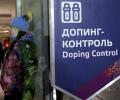
Here are some reactions from the world of sport on of widespread state-sponsored doping by Russian athletes at the 2014 Sochi Olympics.

Australia has backed a World Anti-Doping Agency (WADA) recommendation that Russia be banned from international athletics, including the 2016 Olympics, after a report alleged systemic state-backed cheating.
 © 2026 Rediff.com - Investor Information - Advertise with us - Disclaimer - Privacy Policy - Sitemap - Feedback - About us - Terms of use - Grievances